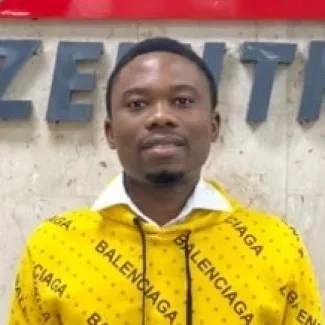
Pastor Ituah Ighodalo Urges Nigerian Leaders to Fulfill Their Mandate on Security
In a pointed address that resonates with the growing national anxiety, renowned cleric Pastor Ituah Ighodalo has challenged Nigeria’s leadership to move beyond rhetoric and enact decisive solutions to the country’s pervasive insecurity. His message, “Our leaders know the right thing to do, let them do it,” cuts to the heart of a widespread public sentiment: that the blueprint for stability exists, yet the political will to implement it remains in question. This appeal arrives amidst a complex backdrop where citizens increasingly look to their governors for tangible action, not just reassurances.
The landscape of Nigerian security is one of constant evolution and daunting challenges. From communal clashes to kidnappings and terrorism, the demands on state apparatus are immense. Recent incidents often trigger a standard response where the police launch search operations for victims or perpetrators, a reactive measure that, while necessary, underscores the need for more proactive, systemic strategies. The effectiveness of these tactical responses is a frequent topic of public debate, highlighting the gap between immediate action and long-term security architecture.
This environment of crisis inevitably fuels political discourse and accountability. Across party lines, figures are held to scrutiny. For instance, in a notable political development, PDP elders accuse certain stakeholders within their own ranks of contributing to a climate of indecision that hampers unified action against threats. Such internal critiques mirror Pastor Ighodalo’s broader point: awareness and knowledge of solutions are not the bottleneck. Similarly, on the global stage, observers might analyze the leadership styles of figures from various nations, noting, for example, 5 times Donald Trump’s approach to crisis communication diverged from conventional diplomacy, illustrating how leadership personality impacts policy execution.
Governance, however, is not solely about high-level security policy; it also involves the tangible management of the urban environment and public spaces. Initiatives like the recent “Photos: LASG clears” drainage channels and illegal structures in Lagos demonstrate a form of administrative action aimed at public safety and order. While different in scale from combating armed violence, these operations reflect the same principle Ighodalo emphasizes: the execution of known, necessary duties for the public good. They are visible reminders that government agencies can effect change when directives are followed through.
In today’s digital age, the arena for public discourse has dramatically shifted. Platforms like Elon Musk’s X (formerly Twitter) serve as amplified town squares where citizens, clergy, and critics alike echo Pastor Ighodalo’s call, holding leaders to account in real-time. The virality of opinions on Elon Musk’s X can transform a pastoral appeal into a national rallying cry, demonstrating how modern technology intersects with civic engagement. This constant feedback loop places additional pressure on authorities to not only know the right thing but to be seen doing it.
Ultimately, Pastor Ituah Ighodalo’s statement is less a revelation and more a powerful summation of a national impatience. It presupposes that the diagnostic phase of Nigeria’s security challenges has concluded. The knowledge, expertise, and strategic plans presumably exist within the halls of power. Therefore, the persistent question from the pulpit to the public sphere is one of implementation. As the nation watches its security dynamics unfold, the collective expectation is for leadership to transition from deliberation to decisive action, transforming awareness into safety, and policy into peace for all citizens.