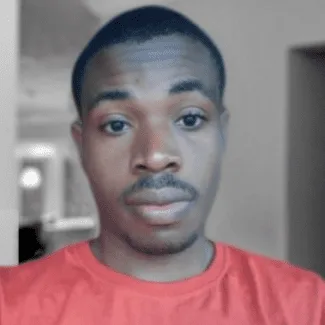
Rui Pinto is not a name that resonates with every Manchester City supporter, yet the Portuguese computer hacker has occupied a central position in one of the most consequential financial controversies the sport has ever witnessed. Through Football Leaks, the website he founded to publish confidential documents belonging to clubs, players and agents, Pinto helped bring a trove of hidden information into the public domain. The Premier League’s financial charges against Manchester City, which the club has denied and is expected to appeal, are also connected to documents published by Pinto through Football Leaks.
According to the BBC, the leaked material included internal emails concerning sponsorship deals and payments involving Manchester City, and it eventually formed part of the background to the Premier League’s financial case against the club. Now 37 years old, Pinto has spent years at the heart of a debate over whether he should be regarded as a criminal hacker or as a whistleblower who exposed what he described as the hidden side of football.
Early Life in Vila Nova de Gaia
Pinto’s story began in Vila Nova de Gaia, a city across the Douro River from Porto, where he grew up. His former geography teacher, Mario Falcao, remembers him as an ordinary pupil with a particular aptitude for computers. “Rui was a perfectly normal pupil. He was nice, with his spiky hair, he was quite sociable but not extrovert,” Falcao said. “He had a good relationship with the teachers, although he did miss these classes quite often. His father was always on top of things, so in the end he passed quite easily.”
Falcao also recalled that Pinto was very good with computers. “All the work that he did for various courses were very good, when he put his mind to it,” he said. As a young man, Pinto lived a relatively ordinary life, according to his former teacher, who remembered him going to the gym and to McDonald’s.
Pinto grew up in a modest family. His father, Francisco, worked in a shoe factory before becoming an antiques dealer, while his mother died when he was 11. Falcao said he never imagined his former pupil would become internationally known through Football Leaks. “We were very surprised,” he said of the moment Pinto was named as the founder of Football Leaks in 2019. “We weren’t imagining anything like this could happen, that he could have problems with justice. I certainly wouldn’t wish him and his family to be in this situation. Perhaps it was a question of the excesses of youth, his ability with computers, and maybe an excess of club-ism.”
Falcao suggested that Pinto’s support for FC Porto may have prompted some of his actions, while also noting that he may have felt a need for justice that young people often feel.
The Founding of Football Leaks
Pinto established Football Leaks in 2015 with the stated aim of exposing what he called the hidden side of football. Portuguese journalist Antonio Varela was the first journalist contacted by Pinto, who used the pseudonym “John” because his real identity was not initially known. “It was a common day of September 2015. I was at the news room at Record and I got an email from Football Leaks. It was strange. Then I immediately go to the site, and I can’t believe there is lots of information that you never heard or read. We made the conclusion this is very, very important,” Varela said.
The material raised questions for journalists over whether information obtained illegally could still be published when it was considered to be in the public interest. “We realised that Football Leaks got the information illegally. But since the moment they publish the information on the site, that’s public information,” Varela said. “You can’t ignore that. Ethically, it’s complicated, but the public interest is more relevant than the ethical issue. That was the conclusion.”
Football Leaks initially focused on Portuguese clubs, including Benfica and Pinto’s supported club, FC Porto. It later expanded to documents and communications involving some of football’s biggest names, including Cristiano Ronaldo, Lionel Messi and Neymar.
Collaboration with Der Spiegel
Pinto eventually established contact with Rafael Buschmann, a journalist at the German magazine Der Spiegel. After deciding he could trust Buschmann, Pinto shared tens of millions of documents with him. A team of journalists at Der Spiegel in Hamburg then worked through the material, producing a series of reports that drew international attention.
Christoph Winterbach, a data journalist who worked on the project, recalled the experience of seeing the documents for the first time. “In the beginning it was very much a fascinating feeling of like a child in a candy store,” he said. “If you’re a football fan, if you’re a sports journalist, it was amazing to see the actual documents, to see those emails where things are negotiated and to get a real look behind the curtain, how things work.”
Winterbach explained, however, that the journalists had to establish the authenticity and relevance of the material before publication. “It’s very important when you have this type of documents, this type of data, that you make a lot of cross checks, that you use some software which we did that can put it all into context and you can see if there’s any reliability issues. We always need to make sure that it’s authentic material and whenever we publish something about it, it needs to be in the public interest to start writing.”
Pinto ultimately provided more than three terabytes of information to Der Spiegel and other outlets in the European Investigative Collaborations consortium. Winterbach met Pinto in person in 2019 while he was being held in prison in Lisbon awaiting trial, and later interviewed him again in witness protection at a secret location.
Describing Pinto, Winterbach said: “Rui Pinto is not very tall. He has very distinctive hair, like spiky hair. He usually has red cheeks and he’s a youthful, cheeky, funny character. He’s friendly and warm when you meet him. He’s a very impressive character, he’s very focused, he’s very concentrated. He’s very, very intelligent. He’s very idealistic about the topics that he uncovered. He’s one of the most important whistleblowers that we have in Europe or maybe the world.”
A Polarising Figure
Former Portuguese politician and diplomat Ana Gomes has testified on Pinto’s behalf and argued that he should be protected as a whistleblower. “What he has exposed is very important. In Portugal, definitely he is by far the most important whistleblower,” Gomes said. “He should be made an ally of our judicial and criminal investigative authorities. He has helped the authorities of other European countries in going after the corrupt and the criminals, instead of being the subject of this judicial prosecution by the choice of our public prosecutors.”
Asked about Manchester City, whose emails were hacked by Pinto, Gomes said: “I couldn’t care less. If they have nothing to hide, what’s their problem?”
Retired journalist Jose Carlos Freitas offered a more divided assessment. “For the majority of the people, they look at him as a thief. For some people, he is a kind of hero, a Robin Hood, you can say because he was exposing the dark side of the business of so many clubs, but unfortunately for the majority of the people, he is not a good person,” Freitas said. “Nowadays, I think I put him in the middle because he got the information illegally. But he gave us, all of us, a view, a dark view of European football, so he did a job to the society illegally.”
Legal Consequences
Pinto’s activities have also carried serious consequences for him personally. He was arrested in Hungary in 2019 and extradited to Portugal. Over the following years, he was held in solitary confinement, placed under house arrest and later entered witness protection.
Following his first trial in Portugal, Pinto received a four-year suspended sentence in 2023 after being found guilty of attempted extortion, illegal access to data and breach of correspondence. A separate trial in France resulted in a six-month suspended prison sentence. At a later trial in Lisbon, his security arrangements reflected the attention surrounding his case.
Whether Pinto is remembered as a criminal or a crusader remains a matter of perspective, but the documents he released have left a lasting mark on how the business of football is scrutinised, and on the legal battles that continue to unfold in their wake.